

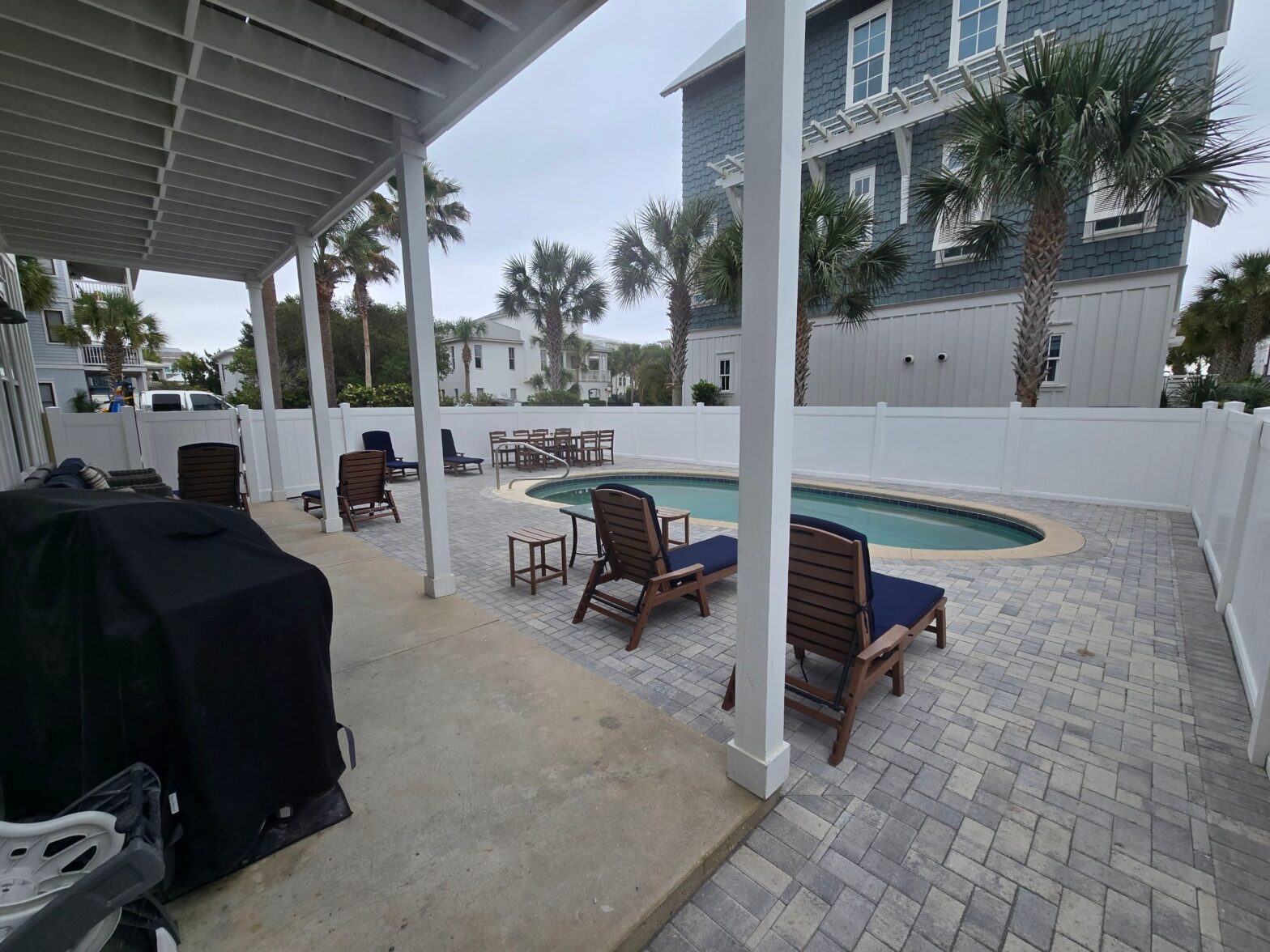
Why Emily Carter Ditched the Maintenance Headaches: Her Vinyl Fence Story 🏡
The Problem Nobody Talks About
Most homeowners don’t realize they’re signing up for a lifetime of maintenance when they choose traditional fencing. Pressure washing, staining, repainting, replacing rotted boards—it never ends. Emily Carter knew this all too well.
After years of watching her neighbors battle the Florida elements, Emily made a decision that would transform not just her backyard, but her entire relationship with outdoor home maintenance.
The Vinyl Fence Advantage Emily Discovered
When Emily Carter decided to invest in a new fence for her Panama City home, she wasn’t looking for just any solution. She wanted something that would:
- Survive Florida’s brutal coastal climate without deteriorating
- Stay beautiful year-round without constant upkeep
- Provide genuine privacy without the visual bulk of traditional materials
- Hold its value and actually enhance her home’s curb appeal
That’s when she discovered vinyl fencing—and why she never looked back.
What Makes Vinyl Different (And Why It Matters)
Unlike wood fences that splinter, crack, and fade, vinyl fencing offers something revolutionary: set it and forget it durability. Emily’s new fence doesn’t require:
- Annual staining or sealing
- Pressure washing to remove mildew
- Board replacement due to rot or termite damage
- Constant touch-ups to maintain appearance
Instead, Emily simply rinses her fence with a garden hose a couple times a year. That’s it.
The Real Cost Comparison
Here’s what surprised Emily most: while vinyl fencing has a higher upfront cost than wood, the long-term economics tell a completely different story.
Over 20 years:
- Wood fence: $3,000 initial + $500/year maintenance = $13,000 total
- Vinyl fence: $5,500 initial + $50/year maintenance = $6,500 total
Emily’s vinyl fence will pay for itself in maintenance savings alone—while looking better the entire time.
Florida’s Coastal Climate: Where Vinyl Thrives
Panama City’s salt air, intense UV exposure, and hurricane-force winds are brutal on traditional fencing materials. Vinyl doesn’t just survive these conditions—it’s engineered for them.
Emily’s fence resists:
- Salt spray corrosion
- UV fading (premium vinyl maintains color for 20+ years)
- Moisture damage and mold growth
- Wind damage (vinyl’s flexibility prevents cracking)
The Aesthetic Question: Does Vinyl Really Look Good?
This is where Emily’s project challenges a common misconception. Modern vinyl fencing doesn’t look cheap or plastic-y anymore. Her fence features:
- Authentic wood-grain textures that mimic real cedar
- Clean, contemporary lines that complement her home’s architecture
- Consistent color that won’t fade or weather unevenly
- Professional installation that looks indistinguishable from premium materials
Her neighbors actually asked if it was real wood.
Installation & Timeline
Emily’s vinyl fence installation was remarkably straightforward. The Mr. Fence of Florida team:
1. Assessed her property and designed a custom layout
2. Prepared the foundation with proper post installation
3. Installed vinyl panels with precision alignment
4. Added finishing touches including caps and hardware
The entire project took just 3-4 days—significantly faster than wood fence installation.
Privacy Without Compromise
Emily specifically chose vinyl for privacy, and the results exceeded her expectations. Her new fence:
- Blocks sight lines completely (no gaps or shrinkage like wood)
- Reduces noise from the street by up to 50%
- Creates a defined outdoor living space
- Provides security without looking fortress-like
The Warranty That Matters
Emily’s vinyl fence comes with a lifetime warranty against manufacturing defects. This isn’t just marketing speak—it’s genuine peace of mind. If anything fails due to material defects, it’s replaced at no cost.
Compare that to wood fences, which typically have no warranty and deteriorate predictably.
Maintenance Reality Check
Yes, vinyl requires some maintenance—but it’s minimal:
- Spring cleaning: Rinse with garden hose to remove pollen and dust
- Seasonal inspection: Check for any debris or damage
- Occasional spot cleaning: Use mild soap and water for stubborn stains
- That’s it: No staining, sealing, or repainting ever
Emily spends about 2 hours per year on maintenance. Her previous wood fence required 20+ hours annually.
The Environmental Angle
Interestingly, vinyl fencing is increasingly recognized as the eco-friendly choice. Here’s why:
- Longevity: A 30-year vinyl fence vs. a 15-year wood fence means fewer replacements
- No chemical treatments: Vinyl doesn’t require toxic stains or sealers
- Recyclable: Modern vinyl is increasingly recyclable at end-of-life
- Reduced waste: No rotted boards ending up in landfills
Emily appreciated knowing her choice was environmentally responsible.
Real Talk: Is Vinyl Right for You?
Vinyl fencing isn’t perfect for every situation, but for Emily’s Panama City home, it was ideal because:
✅ She wanted low maintenance
✅ She valued long-term cost savings
✅ She needed durability in a coastal climate
✅ She wanted consistent aesthetics
✅ She planned to stay in her home long-term
If these factors match your situation, vinyl might be your answer too.
The Bottom Line
Emily Carter’s vinyl fence represents a shift in how homeowners think about outdoor investments. It’s not about choosing the cheapest option—it’s about choosing the smartest option.
Smart means:
- Durability that lasts decades
- Maintenance that takes hours, not weeks
- Beauty that doesn’t fade
- Value that compounds over time
- 📞 Call 850-604-0900 today for a free consultation
- Or visit us online to see more vinyl fence projects and get an instant quote.